
Virtual Office vs Physical Office: Which One is Better for Startups?
Launching a startup involves hundreds of decisions, and one of the earliest strategic choices founders must make is selecting the right workspace. Traditionally, businesses were expected to operate from a dedicated office space where employees worked together daily. However, the modern startup ecosystem has evolved significantly. Today, founders are exploring flexible workplace models that allow them to reduce operational costs while maintaining a professional business presence.
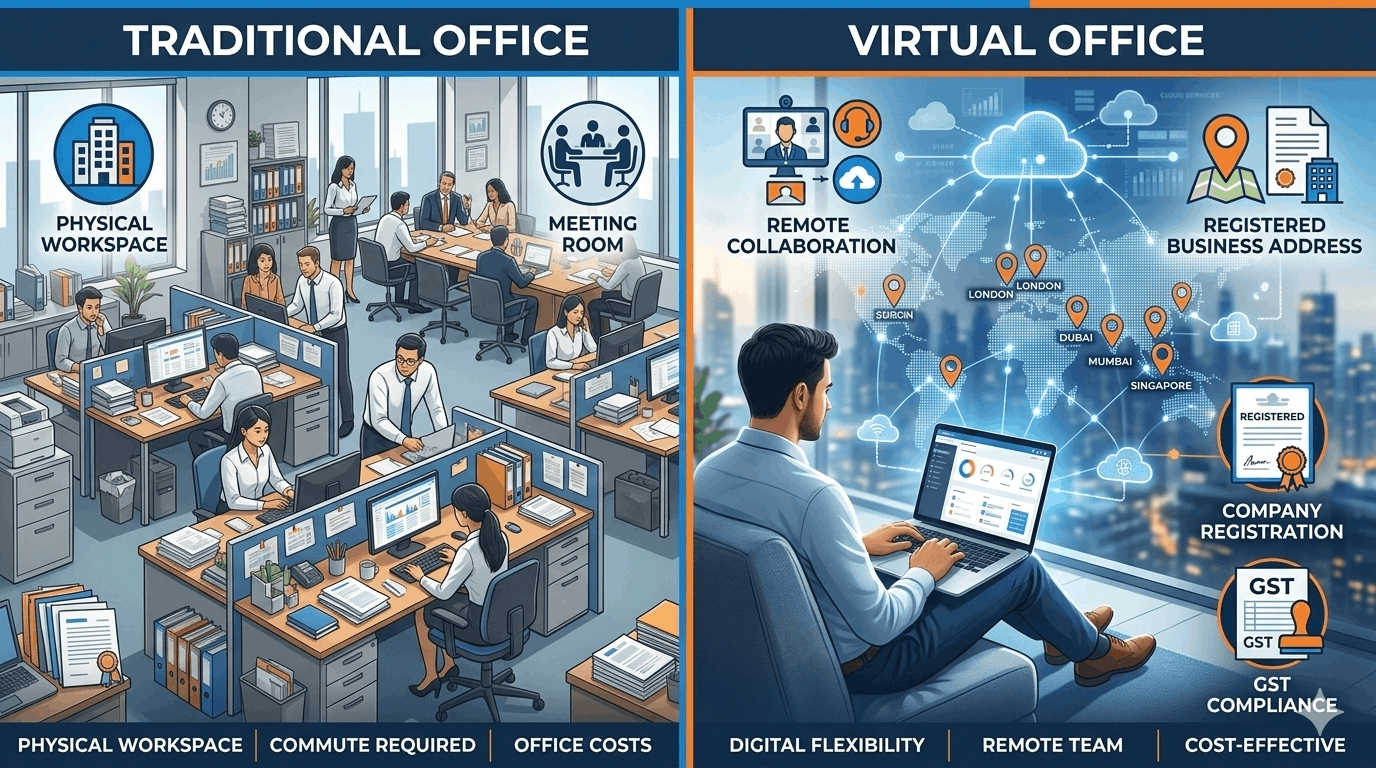
One of the most common debates among entrepreneurs today is virtual office vs physical office. While a traditional office offers a permanent workspace for teams, a virtual office provides a professional address and essential business services without requiring companies to rent or maintain a full-time office.
Startups often operate with limited budgets, and early-stage founders need to allocate resources carefully. Spending a large portion of capital on office rent, infrastructure, and utilities may not always be the most practical decision during the initial growth phase.
At the same time, businesses still require a startup office address for legal registration, tax documentation, and client communication. This requirement has created demand for flexible office solutions that combine professionalism with affordability.
In this detailed guide, we will explore the differences between virtual and physical offices, compare their costs and flexibility, and help entrepreneurs determine the best office solution for startups based on their business needs.
What is a Physical Office?
A physical office is a traditional workspace where employees, founders, and teams work together from a fixed location. It is a dedicated space that a company rents or owns for its daily business operations.
Physical offices typically include workstations, meeting rooms, conference spaces, reception areas, and other facilities required for business activities. Companies using physical offices often sign long-term lease agreements with property owners and manage the office environment themselves.
For decades, this model has been the standard for most organizations. It provides a central location where teams can collaborate, hold meetings, and manage day-to-day operations.
Some of the common features of a physical office include:
- Dedicated office space for employees
- In-person collaboration between teams
- Meeting rooms and conference areas
- On-site administrative support
- Permanent company signage and branding
However, setting up and maintaining a physical office involves several costs and responsibilities. Businesses must handle rental payments, office furniture, internet connections, electricity, maintenance, and other operational expenses.
The cost of a physical office in India can vary significantly depending on the city and the type of commercial property. Major metropolitan areas such as Mumbai, Bengaluru, Hyderabad, and Delhi often have high rental rates, especially in prime commercial districts.
For established companies with large teams, physical offices can provide a structured environment for collaboration and productivity. But for startups that are still testing their business model or working with distributed teams, maintaining a full office space may not always be the most efficient option.
What is a Virtual Office?
A virtual office is a flexible business solution that provides companies with a professional office address and business services without requiring them to rent a permanent physical workspace.
Instead of maintaining a full office, businesses can use the address provided by the virtual office provider for official purposes such as company registration, GST documentation, and business communication.
A virtual office allows entrepreneurs to run their businesses remotely while still maintaining a credible and professional presence in the market.
Some of the key features typically included in virtual office services are:
- A professional commercial address for business registration
- Documentation required for legal compliance
- Mail handling and forwarding services
- Access to meeting rooms when required
- Administrative support services
One of the major virtual office benefits is that it allows businesses to operate from anywhere. Founders and employees can work from home, coworking spaces, or different cities while still maintaining a stable business address.
This flexibility has made virtual offices particularly popular among startups, freelancers, consultants, and digital businesses that do not require a permanent workspace.
Virtual offices have also emerged as one of the most effective office alternatives for startups, especially during the early stages when minimizing expenses is crucial for survival and growth.
Cost Comparison–
When evaluating virtual office vs physical office, cost is one of the most significant factors that startups consider.
Setting up a physical office requires substantial upfront investment as well as recurring monthly expenses. Some of the major costs associated with a traditional office include:
- Monthly rent or lease payments
- Security deposits
- Office furniture and equipment
- Internet and electricity bills
- Maintenance and cleaning services
- Office management staff
In major Indian cities, commercial office rentals can be extremely expensive. Depending on the location, the cost of a physical office in India can range from tens of thousands to several lakhs per month.
For startups with limited funding, such expenses can significantly reduce available capital for product development, marketing, hiring, and scaling operations.
In contrast, a virtual office provides a professional business address at a fraction of the cost of maintaining a physical workspace.
Because companies are not paying for full-time office infrastructure, the cost savings can be substantial.
This cost efficiency allows startups to invest more resources in growth-focused activities such as building their product, acquiring customers, and improving their services.
For many early-stage companies, a virtual office provides the perfect balance between affordability and professionalism.
Flexibility Comparison–
Another important factor in choosing the best office solution for startups is flexibility.
Physical offices often require businesses to commit to long-term lease agreements that may last several years. These contracts can limit a startup’s ability to adapt quickly to changing business needs.
If a startup decides to expand, relocate, or transition to remote work, breaking a commercial lease can be complicated and expensive.
Physical offices also require employees to work from a fixed location, which may reduce flexibility for remote teams.
On the other hand, virtual offices offer significantly greater flexibility.
Businesses can maintain a professional startup office address while allowing founders and team members to work remotely from different locations.
This flexibility supports modern working styles and helps startups attract talent from different regions without requiring relocation.
Virtual offices also allow businesses to scale their operations more easily. Companies can expand into new cities by obtaining additional virtual office addresses without opening full physical branches.
For startups operating in fast-changing industries, this adaptability can be a major advantage.
Which Businesses Should Choose a Virtual Office?
While both physical and virtual offices have their own advantages, virtual offices are particularly well-suited for certain types of businesses.
Startups that prioritize flexibility, cost efficiency, and remote collaboration often benefit the most from virtual office solutions.
Some businesses that commonly choose virtual offices include:
Early-Stage Startups:
New startups often need to minimize expenses while validating their business model. A virtual office allows them to maintain a professional presence without high operational costs.
Freelancers and Consultants:
Independent professionals who work remotely may still require a business address for legal registration and client communication.
Digital and Technology Companies:
Software development firms, digital marketing agencies, and online service providers often operate with remote teams and do not require daily physical offices.
E-commerce Businesses:
Online sellers may need a registered office address for GST documentation and business registration even if their operations are primarily digital.
Companies Expanding to New Cities:
Businesses that want to test new markets can use virtual offices to establish a presence without opening a full branch.
For these types of businesses, virtual offices represent one of the most practical office alternatives for startups.
Why is VOspaces ideal for Startups?
Choosing the right virtual office provider is an important step for startups that want to benefit from flexible workspace solutions.
VOspaces offers virtual office services designed specifically to support entrepreneurs and growing businesses.
By providing professional business addresses in recognized commercial locations, VOspaces enables startups to establish credibility without committing to expensive office spaces.
Some of the key advantages of choosing VOspaces include:
Prime Business Addresses:
Startups can use well-recognized commercial locations as their official business address.
Affordable Office Solutions:
VOspaces offers cost-effective virtual office plans that help startups maintain professionalism while managing budgets efficiently.
Documentation for Business Registration:
VOspaces provides essential documents required for company registration and compliance processes.
Flexible Workspace Options:
Startups can access meeting rooms and professional spaces whenever they need to host clients or conduct business discussions.
Support for Growing Businesses:
As startups expand, VOspaces allows them to establish a presence in additional cities without opening full offices.
These features make VOspaces an ideal partner for entrepreneurs seeking flexible workspace solutions that support growth and innovation.
Virtual Office vs Physical Office: The Smarter Choice for Startups
The decision between a virtual office and a physical office ultimately depends on the specific needs and stage of a startup.
Physical offices offer a traditional workspace where teams can collaborate in person, but they also involve high costs and long-term commitments. For startups with limited budgets and evolving business models, maintaining a full office space may not always be practical.
Virtual offices provide a modern alternative that allows businesses to maintain a professional startup office address while operating remotely. With lower costs, greater flexibility, and the ability to expand into multiple markets, virtual offices have become one of the best office solutions for startups.
Entrepreneurs who choose virtual office solutions can focus more on building their business rather than managing expensive infrastructure.
If you are launching a startup and looking for a flexible, affordable way to establish a professional presence, a virtual office could be the right choice for your business.
Explore VOspaces today and discover how a virtual office can help your startup grow faster while maintaining a professional business identity.