
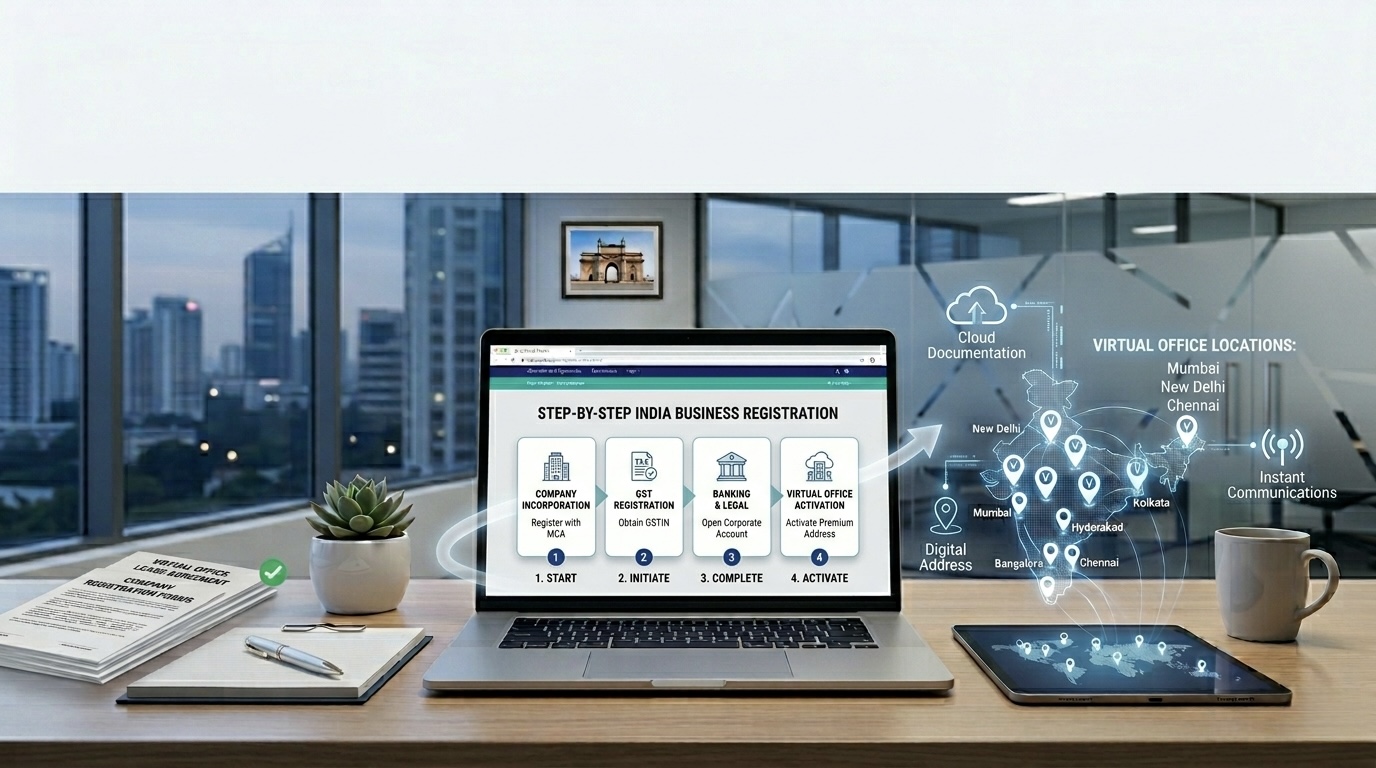
Step-by-Step Process to Start Your Business in India Using a Virtual Office
India has emerged as one of the fastest-growing entrepreneurial ecosystems in the world. With government initiatives, digital transformation, and a booming startup culture, launching a business is no longer limited to those with large capital or physical infrastructure. Today, entrepreneurs, freelancers, and small business owners are increasingly choosing smarter, leaner ways to build their ventures.
One such modern approach is to start a business with a virtual office in India.
A virtual office allows you to establish a professional business presence without renting or owning a physical workspace. It provides a legally valid address for company registration, GST registration, and official communication—making it an ideal solution for startups aiming to reduce costs and scale quickly.
In this comprehensive guide, we will walk you through the complete step-by-step process of starting your business in India using a virtual office, along with key benefits, legal requirements, and cost comparisons to help you make an informed decision.
Can You Start a Business Without a Physical Office?
The traditional idea of a business has always been associated with a physical office—desks, meeting rooms, and employees working under one roof. However, this model is rapidly evolving.
The Short Answer: Yes, You Can
In India, it is completely legal to start and run a business without owning or leasing a physical office space. What you do need, however, is a valid business address for:
- Company registration
- GST registration
- Receiving official communication
- Opening a business bank account
This requirement can be fulfilled through a virtual office.
How It Works
A virtual office provides you with:
- A commercial address in a recognised location
- Legal documentation, such as a rent agreement and NOC
- Mail handling and forwarding services
- Optional access to meeting rooms or coworking spaces
As long as your virtual office provider offers GST-compliant documentation, you can use that address for all official registrations.
Who Should Consider This Model?
- Startups with limited initial capital
- Freelancers and consultants
- E-commerce sellers
- Remote-first businesses
- Companies expanding to new cities
The flexibility and affordability of virtual offices make them a practical choice for modern businesses.
Benefits of Using a Virtual Office
Choosing to start a business with a virtual office in India comes with multiple advantages that go beyond just cost savings.
1. Significant Cost Reduction
Renting a physical office in major cities like Delhi, Mumbai, or Bangalore can be expensive. A virtual office eliminates costs such as:
- Monthly rent
- Utility bills
- Office maintenance
- Furniture and infrastructure
This allows you to invest more in business growth.
2. Access to Premium Business Locations
A virtual office lets you establish your business in prime locations without actually being there. This enhances your brand image and credibility.
For example, having an address in a well-known business district can make a strong impression on clients and partners.
3. Easy Multi-City Expansion
If you want to operate in multiple states, you need separate GST registrations. Virtual offices make it easy to set up addresses in different cities without physical expansion.
4. Faster Setup and Registration
Most virtual office providers offer quick onboarding and documentation, allowing you to complete registrations in a matter of days instead of weeks.
5. Flexibility and Remote Work Enablement
You and your team can work from anywhere while maintaining a professional business presence.
6. Simplified Compliance
With proper documentation like a rent agreement and an NOC, virtual offices help ensure smooth company and GST registration processes.
Step-by-Step Business Registration Process
Starting a business using a virtual office involves a series of structured steps. When followed correctly, the entire process becomes efficient and hassle-free.
Choose Business Structure
The first step is deciding the legal structure of your business. This decision impacts taxation, compliance, and scalability.
Common Business Structures in India
1. Sole Proprietorship
- Easy to start
- Minimal compliance
- Suitable for freelancers and small businesses
2. Partnership Firm
- Owned by two or more individuals
- Requires a partnership deed
3. Limited Liability Partnership (LLP)
- Combines the flexibility of a partnership with limited liability
- Moderate compliance requirements
4. Private Limited Company
- Separate legal entity
- Ideal for startups seeking funding
- Higher compliance but better scalability
Choose a structure based on your long-term goals, funding plans, and operational needs.
Get Virtual Office Address:
Once you finalise your business structure, the next step is to secure a virtual office address.
What to Look for in a Provider-
- GST-compliant documentation
- Presence in multiple cities
- Transparent pricing
- Quick setup timelines
- Positive customer feedback
Documents You Will Receive-
- Rent agreement
- No Objection Certificate (NOC)
- Utility bill
These documents will be used for company registration and GST registration.
Company Registration-
After obtaining your virtual office address, you can proceed with registering your business.
Steps Involved-
- Obtain Digital Signature Certificate (DSC)
Required for signing electronic documents - Apply for Director Identification Number (DIN)
Mandatory for company directors - Name Approval
Choose a unique business name and get approval - Incorporation Filing
Submit the required documents, including address proof - Certificate of Incorporation
Issued by the Ministry of Corporate Affairs (MCA)
Once this process is completed, your company becomes a legally recognised entity.
GST Registration:
GST registration is mandatory for most businesses, especially those involved in interstate trade or e-commerce.
Why Virtual Office Helps?
The virtual office address serves as your principal place of business, supported by:
- Rent agreement
- NOC
- Utility bill
Steps to Register-
- Visit the GST portal
- Fill out the application form
- Upload required documents
- Complete verification (OTP or physical, if required)
- Receive GSTIN
A properly set up virtual office ensures faster approval and fewer complications.
Open Bank Account-
Once your company and GST registrations are complete, you need to open a business bank account.
Required Documents-
- Certificate of Incorporation
- PAN card of the company
- GST certificate
- Address proof (virtual office documents)
A business bank account is essential for managing finances, receiving payments, and maintaining transparency.
Legal Compliance You Must Follow
Even though a virtual office simplifies operations, your business must still comply with legal requirements.
1. Maintain Proper Documentation
Keep all agreements, licenses, and registration certificates updated and accessible.
2. GST Filing
Regular GST returns must be filed as per your business type and turnover.
3. Income Tax Compliance
File income tax returns annually and maintain proper accounting records.
4. ROC Compliance (for Companies)
Private limited companies and LLPs must file annual returns with the Registrar of Companies.
5. Use Address Appropriately
Ensure that your virtual office address is used only for official and legal purposes as per the agreement terms.
6. Renew Agreements
Virtual office agreements are typically valid for a specific duration and must be renewed periodically.
Cost Comparison: Virtual vs Physical Office
Understanding the cost difference between a virtual and physical office can help you make a smarter financial decision.
Physical Office Costs
- Rent: High monthly expense
- Security deposit: 3–6 months’ rent
- Utilities: Electricity, internet, water
- Furniture and setup
- Maintenance and staff
Virtual Office Costs
- Affordable annual plans
- No heavy upfront investment
- No maintenance costs
- Pay only for services you need
Real Impact
A virtual office can reduce your operational costs by up to 70–90% compared to a traditional office setup. This makes it an ideal choice for startups and small businesses aiming to maximise efficiency.
Start Your Business the Smart Way with Vospaces
If you’re planning to start a business with a virtual office in India, choosing the right provider can make all the difference.
Vospaces offers a seamless and reliable solution designed for modern entrepreneurs who value speed, compliance, and flexibility.
Why Choose Vospaces?
- GST-compliant virtual office solutions
- Presence in major cities across India
- Fast and hassle-free setup
- Transparent pricing structure
- Dedicated customer support
Whether you are launching your first venture or expanding into new markets, Vospaces provides the infrastructure you need without the burden of traditional office costs.
Build Smarter, Scale Faster
The way businesses operate is evolving—and those who adapt early gain a significant advantage. A virtual office is not just an alternative to a physical workspace; it is a strategic tool that empowers entrepreneurs to launch quickly, operate efficiently, and scale without limitations.
By following the step-by-step process outlined in this guide, you can confidently set up your business in India using a virtual office and focus on growth, innovation, and success.
Now is the perfect time to embrace a smarter way of doing business.