
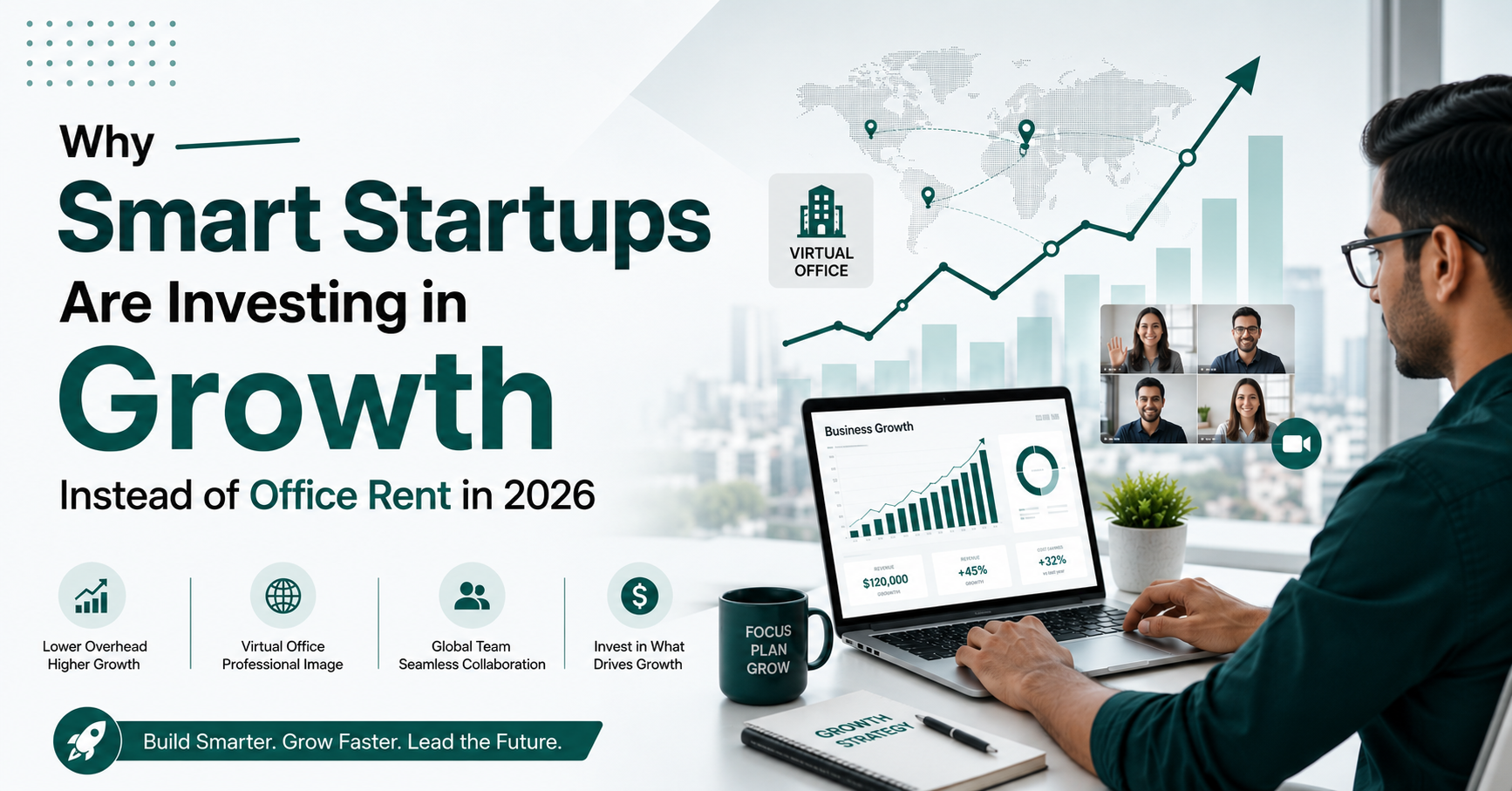
The startup ecosystem in India has transformed dramatically over the past decade. Earlier, having a large office in a prime business location was often seen as a symbol of credibility and success. Investors, clients, and even employees associated expensive office spaces with business growth. Startups spent heavily on commercial leases, office interiors, furniture, meeting rooms, and infrastructure long before achieving stable revenue.
However, the startup landscape in 2026 looks very different.
Modern startups are no longer measuring success by the size of their office space. Instead, they are focusing on scalability, profitability, agility, and sustainable growth. Founders today understand that preserving capital during the early stages of a business can create a major competitive advantage.
The rise of remote work, digital collaboration tools, flexible work culture, and lean business operations has completely changed how startups approach infrastructure decisions. Companies are now prioritizing investments that directly contribute to growth instead of spending a significant portion of their funding on office rentals and maintenance.
In 2026, smart startups are investing in:
- Marketing and customer acquisition
- Hiring skilled talent
- Product development
- Technology infrastructure
- Automation
- Expansion strategies
- Brand building
rather than locking themselves into expensive long-term office leases.
This shift has also increased the popularity of virtual offices among startups across India. A virtual office provides businesses with a professional business address and essential compliance support without the financial burden of traditional office spaces.
As a result, startups can maintain a professional presence while directing more resources toward scaling operations and building stronger businesses.
In this article, we will explore why startups in 2026 are choosing growth over office rent, the hidden costs of traditional offices, how virtual offices support modern business models, and why more founders are embracing lean operational strategies for long-term success.
The Startup Ecosystem Evolution
The startup ecosystem in India has become one of the fastest-growing entrepreneurial environments in the world. Cities like Bangalore, Delhi NCR, Mumbai, Hyderabad, Pune, and Chennai have emerged as major startup hubs, attracting entrepreneurs across industries, including technology, fintech, e-commerce, SaaS, consulting, healthcare, and digital services.
However, alongside this rapid growth, startup founders have also become more financially disciplined.
A few years ago, many startups prioritized appearances over efficiency. Businesses invested heavily in large offices because they believed it helped attract investors and establish credibility.
But market realities changed quickly.
Economic uncertainty, funding slowdowns, remote work adoption, and increasing competition forced startups to rethink operational priorities. Founders realized that spending heavily on office infrastructure often reduced financial flexibility during crucial growth stages.
As startup culture evolved, companies began focusing on lean business operations.
The Shift Toward Lean Operations
Lean operations refer to building businesses that maximize productivity while minimizing unnecessary expenses.
Instead of spending aggressively on non-essential infrastructure, modern startups prioritize:
- Revenue generation
- Customer retention
- Product-market fit
- Scalable systems
- Efficient hiring
- Operational flexibility
This shift has become even stronger after the widespread acceptance of remote and hybrid work models.
Today, many successful startups operate with distributed teams, remote employees, freelancers, and flexible collaboration systems. Businesses no longer require massive office spaces to function efficiently.
The focus has shifted from “owning office space” to “building scalable businesses.”
Startups now ask smarter questions, such as:
- Will this expense directly contribute to growth?
- Can these funds generate better returns elsewhere?
- Is a large office necessary at this stage?
- Can operations run effectively with a flexible infrastructure?
These changes have fundamentally transformed how startups allocate resources in 2026.
The Real Cost of Traditional Offices
Traditional office spaces involve far more expenses than just monthly rent. Many startups underestimate the long-term financial burden associated with commercial office infrastructure.
When combined, these costs can significantly impact cash flow and reduce growth opportunities.
Rent
Office rent is usually the largest recurring expense for startups operating from physical commercial spaces.
Prime business districts in cities like:
- Bangalore
- Mumbai
- Gurgaon
- Hyderabad
- Pune
- Chennai
often charge premium rental prices for commercial properties.
In addition to monthly rent, startups may also need to pay:
- Security deposits
- Brokerage charges
- Advance rent
- Parking fees
- Common area maintenance charges
For early-stage startups, this creates heavy financial pressure before stable revenue streams are established.
Many businesses end up committing a large percentage of their funding toward office expenses that do not directly generate growth.
Interiors & Maintenance
Setting up a traditional office requires substantial investment in infrastructure and interiors.
Common setup expenses include:
- Furniture
- Workstations
- Cabins
- Conference rooms
- Internet infrastructure
- Air conditioning
- Branding and signage
- Lighting
- Pantry setup
- Security systems
Even a small office setup can cost lakhs of rupees initially.
After setup, businesses must also manage ongoing maintenance expenses, such as:
- Repairs
- Cleaning
- Office management
- Facility maintenance
- Equipment servicing
These costs continue regardless of whether the office is being fully utilized.
Utility Bills
Operational expenses extend beyond rent and infrastructure.
Startups must also manage monthly utility bills, including:
- Electricity
- Water
- Internet
- Housekeeping
- Security services
- Generator backup
- Office supplies
As teams grow, these expenses increase further.
For startups trying to optimize burn rate and extend runway, unnecessary operational overhead can become a major challenge.
Long-Term Financial Commitments
Most commercial leases involve long lock-in periods ranging from one to several years.
This reduces business flexibility and creates financial obligations even during uncertain periods.
If a startup pivots, downsizes, or changes strategy, exiting office agreements can become expensive and complicated.
In many cases, businesses continue paying for underutilized office space simply because they are tied to lease agreements.
Where Smart Startups Are Investing Instead
Rather than spending aggressively on office infrastructure, modern startups are allocating resources toward growth-oriented investments that generate measurable business impact.
Marketing
Customer acquisition has become one of the highest priorities for startups in 2026.
Instead of paying premium office rent, businesses are investing more in:
- Performance marketing
- SEO
- Social media campaigns
- Content marketing
- Influencer partnerships
- Brand building
- Lead generation systems
A strong marketing strategy directly contributes to revenue growth, customer awareness, and business scalability.
Startups understand that attracting customers creates far greater returns than maintaining expensive office spaces.
Hiring
Talent is one of the most valuable assets for any startup.
Modern founders are prioritizing investments in:
- Skilled developers
- Marketing professionals
- Sales teams
- Designers
- Product managers
- Customer success specialists
Remote and hybrid work models have also allowed startups to hire talent from different cities without geographical limitations.
Instead of spending on large office infrastructure, companies are building stronger teams and improving productivity.
Technology
Technology investment has become essential for operational efficiency and scalability.
Startups are allocating funds toward:
- SaaS tools
- Automation systems
- CRM platforms
- AI-based workflows
- Cloud infrastructure
- Collaboration software
- Cybersecurity
- Analytics platforms
Technology improves efficiency while reducing manual operational burdens.
Businesses focusing on digital transformation often scale faster and operate more efficiently than those heavily investing in physical infrastructure.
Product Development
For startups, the product remains the core growth engine.
Smart founders prioritize:
- Product improvement
- User experience
- Research and development
- Feature expansion
- Testing and optimization
Strong products improve customer retention and increase market competitiveness.
Instead of directing funding toward premium office spaces, startups are reinvesting capital into building better products and services.
Expansion & Customer Experience
Many startups are also using saved operational costs for:
- Geographic expansion
- Faster logistics
- Better customer support
- Strategic partnerships
- Market research
This creates long-term business value and supports sustainable growth.
Why Virtual Offices Make More Sense in 2026
As startups embrace lean operations and flexible work culture, virtual offices have become one of the most practical business solutions in 2026.
A virtual office provides a professional business address without requiring businesses to rent physical office space full-time.
This model aligns perfectly with the operational priorities of modern startups.
Lower Costs
One of the biggest advantages of virtual offices is cost efficiency.
Compared to traditional offices, virtual offices eliminate expenses such as:
- Heavy office rent
- Infrastructure setup
- Utility bills
- Maintenance costs
- Long-term lease commitments
Startups can establish a professional business presence while preserving capital for growth-related activities.
This significantly improves financial flexibility during early business stages.
Professional Business Presence
Even though startups may operate remotely, they still require professional business credibility.
Virtual offices help businesses obtain:
- Commercial business addresses
- GST registration support
- Company incorporation support
- Mail handling services
- Business documentation
Having an address in a premium commercial location also improves brand perception among clients, investors, and vendors.
Better Flexibility
Startups evolve rapidly.
Teams expand, strategies change, and market opportunities shift frequently.
Virtual offices provide operational flexibility because businesses are not tied to expensive long-term lease agreements.
This allows startups to:
- Scale faster
- Enter new markets easily
- Expand across cities
- Maintain lower operational risk
Flexibility has become a major competitive advantage for modern startups operating in dynamic markets.
Suitable for Remote & Hybrid Teams
In 2026, many startups operate with:
- Fully remote teams
- Hybrid work culture
- Freelancers and consultants
- Distributed operations
For these businesses, maintaining a large office often becomes unnecessary.
Virtual offices support modern work models while reducing operational inefficiencies.
Real-Life Startup Scenarios
To understand why startups are moving away from traditional office setups, let’s look at some realistic business scenarios.
Scenario 1: SaaS Startup in Bangalore
A SaaS startup with a team of 12 employees operates remotely across Bangalore, Pune, and Hyderabad.
Instead of renting a large office in Bangalore, the founders chose a virtual office for:
- GST registration
- Company address
- Business compliance
The money saved is redirected toward:
- Product development
- Performance marketing
- Hiring engineers
As a result, the startup scales faster without increasing operational burn.
Scenario 2: E-commerce Brand Expanding Across India
An e-commerce seller plans to expand into multiple states for faster logistics and warehouse access.
Instead of opening physical offices in every city, the company uses virtual offices for:
- GST registration
- State-wise business presence
- Compliance documentation
This enables rapid expansion without massive infrastructure investment.
Scenario 3: Digital Marketing Agency
A digital agency with remote employees operates entirely online.
The business only requires:
- A professional business address
- Client credibility
- GST compliance
Rather than paying high office rent, the agency invests in:
- Hiring experienced marketers
- Better software tools
- Client acquisition strategies
This improves profitability while maintaining operational flexibility.
How VOspaces Supports Modern Startups
As startups increasingly move toward flexible business operations, providers like VOSpaces are helping businesses establish professional presence without the burden of traditional office costs.
VOspaces supports startups with business solutions designed for modern operational needs.
Professional Business Addresses
VOspaces offers commercial business addresses in major Indian cities, helping startups maintain professional credibility while operating remotely or flexibly.
GST & Business Registration Support
Many startups require documentation support for:
- GST registration
- Company incorporation
- Business compliance
VOspaces assists businesses with the necessary documentation required for operational setup.
Cost-Effective Expansion
Instead of investing heavily in office rentals, startups can use virtual office solutions to reduce overhead expenses and allocate more capital toward growth initiatives.
Flexible Business Solutions
VOspaces supports businesses operating with:
- Remote teams
- Hybrid models
- Distributed operations
- Multi-city expansion plans
This flexibility aligns well with modern startup culture in 2026.
Presence Across Major Cities
Startups looking to expand into commercial hubs can access virtual office solutions in cities including:
- Delhi
- Bangalore
- Mumbai
- Hyderabad
- Chennai
- Pune
- Gurgaon
- Noida
This simplifies expansion while maintaining operational efficiency.
Start Building Smarter, Not Expensive
The startup ecosystem in 2026 is no longer driven by expensive office spaces and unnecessary infrastructure spending. Today’s most successful startups are focusing on agility, efficiency, scalability, and sustainable growth.
Founders now understand that every rupee spent should contribute directly to business growth.
Instead of locking capital into office rent and maintenance, smart startups are investing in:
- Marketing
- Product innovation
- Hiring
- Technology
- Expansion
- Customer experience
This shift toward lean operations is helping startups scale faster while reducing financial risk.
Virtual offices have become an important part of this modern business model by offering:
- Professional business presence
- GST-compliant addresses
- Operational flexibility
- Reduced overhead costs
- Easier expansion opportunities
Businesses looking to reduce unnecessary office expenses and build smarter operational systems can explore the flexible solutions offered by VOspaces.
In a competitive startup environment, success is no longer about having the biggest office. It is about making smarter decisions, preserving capital, and investing where growth truly happens.