
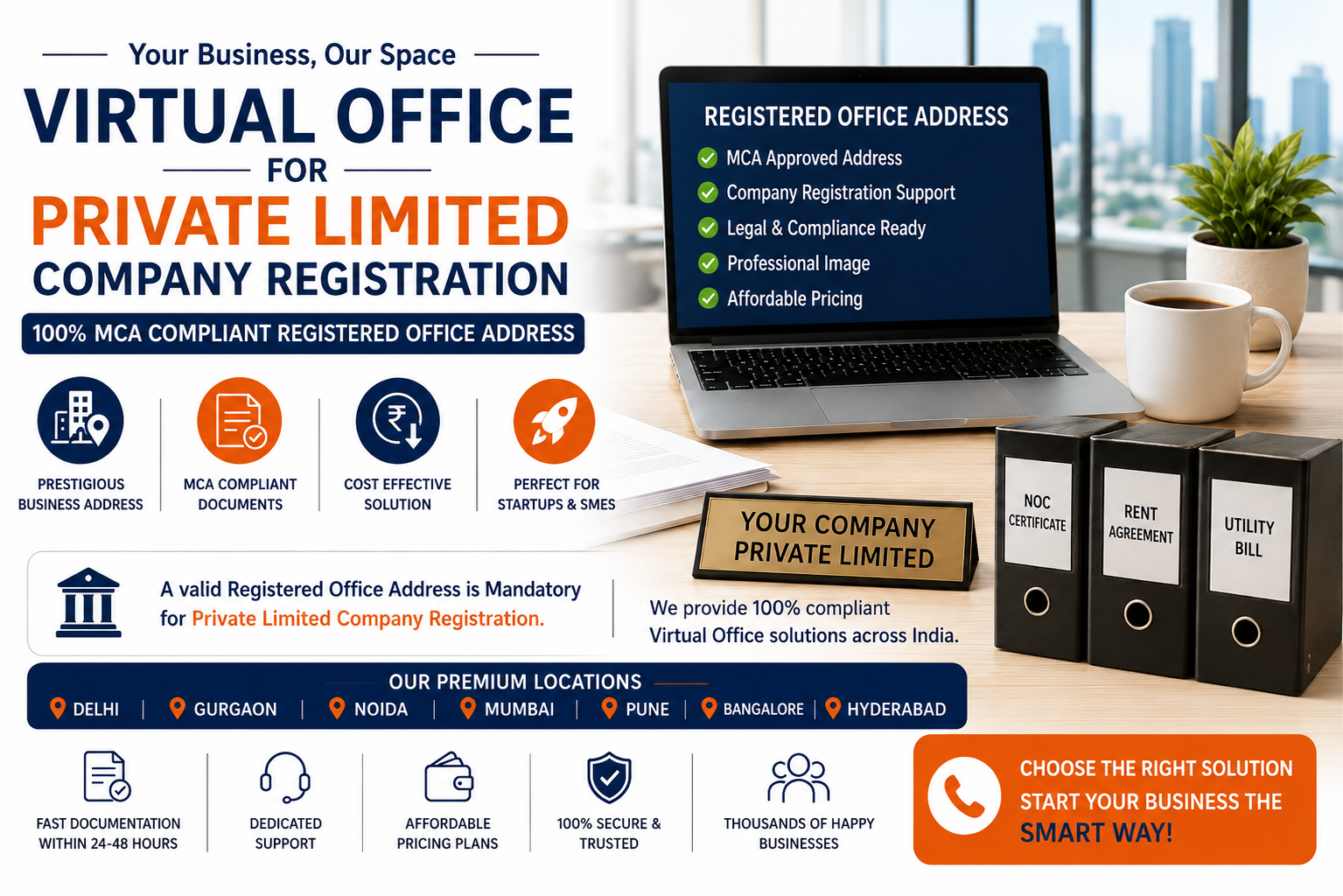
Everything You Need to Know About Using a Virtual Office as Your Registered Office Address
Starting a Private Limited Company in India has become significantly easier over the past few years. Entrepreneurs can now incorporate companies online, complete compliance procedures digitally, and operate businesses remotely from virtually anywhere.
However, one legal requirement remains mandatory:
Every Private Limited Company must have a registered office address.
Many founders assume they need to rent a physical office before registering a company. In reality, thousands of startups, consultants, SaaS businesses, agencies, and online brands now use virtual offices as their registered office address during incorporation.
This approach helps businesses reduce costs, maintain compliance, and establish a professional business presence without committing to expensive commercial leases.
In this guide, we’ll explain everything about using a Virtual Office for Company Registration, including MCA requirements, legal considerations, documentation, benefits, pricing, and how to choose the right provider.
What is a Virtual Office?
A virtual office is a professional commercial address that businesses can use for official registration and communication purposes without renting a dedicated physical workspace.
Unlike traditional offices, virtual offices provide:
- Registered office address
- Company registration support
- Mail handling services
- Professional business presence
- Compliance documentation
- Optional meeting room access
A virtual office allows founders to register and operate a company while keeping operational expenses low.
For startups and digital businesses, this has become one of the most efficient ways to establish a legal business presence.
What is a Registered Office Address?
A registered office address is the official address of a company recorded with the Ministry of Corporate Affairs (MCA).
This address serves as the primary location for:
- Government communication
- Regulatory notices
- Compliance documentation
- Official correspondence
- Company records
Every Private Limited Company, LLP, and One Person Company (OPC) must maintain a registered office address.
Without a valid registered office, company incorporation cannot be completed.
Can a Virtual Office Be Used for Company Registration?
Yes.
A virtual office can be used as a registered office address when it satisfies applicable documentation and compliance requirements.
Many startups and modern businesses use virtual offices during incorporation because they provide:
- Commercial business address
- Address proof documentation
- Professional credibility
- Cost-effective compliance support
This makes virtual offices particularly attractive for founders who do not require a full-time physical office.
Why Entrepreneurs Are Choosing Virtual Offices in 2026
The business landscape has changed dramatically.
Today’s businesses often operate with:
- Remote teams
- Digital-first workflows
- Online sales channels
- Cloud-based infrastructure
- Distributed workforces
As a result, renting expensive office space before generating revenue is no longer practical.
Instead, founders prefer solutions that offer:
- Legal compliance
- Professional business identity
- Low operational costs
- Scalability
A virtual office addresses all these requirements.
MCA Compliance Requirements for Company Registration
When registering a Private Limited Company, the Ministry of Corporate Affairs requires businesses to provide an official address.
The registered office should be capable of receiving:
- Legal notices
- Government correspondence
- Regulatory communications
Businesses must also maintain supporting documentation to establish the legitimacy of the address.
This is why choosing a reliable virtual office provider is critical.
Virtual Office for Company Registration: Key Benefits
1. Lower Startup Costs
Traditional offices often require:
- Security deposits
- Monthly rent
- Maintenance charges
- Utility expenses
- Brokerage fees
These costs can significantly impact a startup’s cash flow.
A virtual office helps eliminate these unnecessary expenses.
2. Professional Business Presence
Your business address influences how customers, investors, vendors, and partners perceive your company.
A professional commercial address can strengthen:
- Brand image
- Corporate credibility
- Customer trust
- Investor confidence
3. Faster Business Setup
Virtual offices simplify the process of obtaining documentation needed during incorporation.
This helps founders register companies more efficiently.
4. Flexibility
Businesses can operate remotely while maintaining a formal business identity.
This flexibility is particularly useful for:
- Startups
- Consultants
- Agencies
- SaaS companies
- E-commerce businesses
5. Easy Expansion
As your business grows, virtual offices allow you to establish presence in multiple cities without opening physical branches.
Who Should Use a Virtual Office?
Virtual offices are ideal for:
Startups
Launch quickly while minimizing overhead costs.
SaaS Companies
Operate remotely with a professional business address.
Digital Marketing Agencies
Maintain compliance without leasing expensive office space.
Consultants
Present a professional image to clients.
E-commerce Businesses
Build a credible business presence while operating online.
Freelancers
Separate personal and professional identities.
Remote Teams
Operate from anywhere while maintaining compliance.
Documents Required for a Virtual Office
Most reputable providers offer documentation that may include:
No Objection Certificate (NOC)
Confirms authorization to use the address.
Rent Agreement
Acts as address proof.
Utility Bill
Supports address verification requirements.
Business Address Documentation
Required during various registration procedures.
Step-by-Step Process for Company Registration Using a Virtual Office
Step 1: Choose a Virtual Office Location
Select a city that aligns with your business objectives.
Popular options include:
- Delhi
- Gurgaon
- Noida
- Mumbai
- Pune
- Bangalore
- Hyderabad
Step 2: Purchase a Virtual Office Plan
Choose a provider offering company registration support.
Step 3: Complete KYC Verification
Submit:
- PAN Card
- Aadhaar Card
- Passport (if applicable)
- Business details
Step 4: Receive Documentation
You will generally receive:
- NOC
- Rent Agreement
- Utility Bill
Step 5: Use the Address During Incorporation
Provide the registered office address and supporting documents during company registration.
Step 6: Receive Incorporation Approval
After approval, your company can legally operate using the registered office address.
Virtual Office vs Traditional Office for Company Registration
| Feature | Virtual Office | Traditional Office |
|---|---|---|
| Initial Cost | Low | High |
| Security Deposit | No | Yes |
| Monthly Rent | Minimal | High |
| Address Documentation | Included | Self-managed |
| Setup Time | Fast | Slow |
| Flexibility | High | Low |
| Remote-Friendly | Yes | Limited |
| Scalability | Excellent | Moderate |
For most startups, virtual offices provide a more efficient and affordable solution.
Pricing Comparison
Traditional Office
Typical costs include:
- Rent
- Security deposit
- Maintenance
- Utilities
- Furnishing
Annual costs can range from ₹1 lakh to ₹20 lakh or more depending on location.
Coworking Space
Generally costs:
₹4,000–₹25,000+ per seat per month.
Suitable for businesses needing regular physical workspace access.
Virtual Office
Generally ranges between:
₹999–₹15,000 annually depending on location and services.
This makes virtual offices one of the most cost-effective solutions for company registration.
Common Mistakes Founders Make During Company Registration
Choosing a Residential Address Without Understanding Requirements
Many founders use personal addresses without considering future scalability.
Ignoring Documentation Quality
Incomplete documentation can delay registration processes.
Choosing Providers Based Only on Price
The cheapest option isn’t always the most reliable.
Not Planning for Future Expansion
Businesses should choose addresses that support long-term growth.
Delaying Compliance Preparation
Having proper documentation ready from the beginning simplifies registration.
Why Startups Prefer Virtual Offices Over Traditional Offices
Modern startups prioritize:
- Cash flow management
- Lean operations
- Remote work
- Scalability
- Digital infrastructure
Virtual offices support all these objectives while maintaining a professional business presence.
Why Choose Vo Spaces?
Vo Spaces helps entrepreneurs establish companies efficiently through premium virtual office solutions.
Benefits of Choosing Vo Spaces
- Premium Commercial Addresses
- Company Registration Support
- Fast Documentation
- Affordable Pricing
- Multiple City Locations
- Dedicated Customer Support
- Startup-Friendly Solutions
- Professional Business Presence
Whether you’re launching a startup, consulting practice, SaaS company, or online business, Vo Spaces helps you establish a compliant and professional registered office address.
Overview Summary
A virtual office is one of the most cost-effective ways to obtain a registered office address for Private Limited Company registration.
It provides:
- Professional business address
- Company registration support
- Required documentation
- Lower startup costs
- Greater flexibility
- Easier scalability
For modern startups and remote-first businesses, virtual offices offer a practical alternative to expensive traditional office leases while supporting legal and compliance requirements.
Frequently Asked Questions
Is a virtual office legal in India?
Yes. Virtual offices are widely used by startups, consultants, agencies, and companies for business registration and operational purposes.
Can a virtual office be used for GST registration?
Yes. Many virtual office providers offer documentation that can support GST-related requirements.
What documents are required?
Typically:
- NOC
- Rent Agreement
- Utility Bill
- Identity Documents
How much does a virtual office cost?
Costs vary by location and provider but are generally much lower than traditional office rentals.
Is a virtual office suitable for startups?
Yes. Virtual offices are particularly beneficial for startups seeking affordability and flexibility.
Can I open a bank account using a virtual office?
Requirements depend on individual banks and compliance policies.
Can freelancers use virtual offices?
Yes. Freelancers often use virtual offices to create a professional business presence.
Which city is best for a virtual office?
Popular options include Delhi, Gurgaon, Noida, Mumbai, Bangalore, Hyderabad, and Pune.
How quickly can I get documents?
Most providers issue documentation shortly after verification.
Is a virtual office better than a coworking space?
For company registration and business address purposes, virtual offices are generally more cost-effective.
Can I register a Private Limited Company using a virtual office?
Yes. Many businesses use virtual offices as their registered office address.
What is a registered office address?
It is the official address recorded with the Ministry of Corporate Affairs for legal and regulatory communication.
Can I change my registered office later?
Yes. Companies may change their registered office address subject to applicable compliance procedures.
Is a virtual office suitable for remote businesses?
Absolutely. Virtual offices are designed for businesses operating remotely.
Why do startups prefer virtual offices?
Because they provide legal compliance, professional credibility, and lower operating costs.