
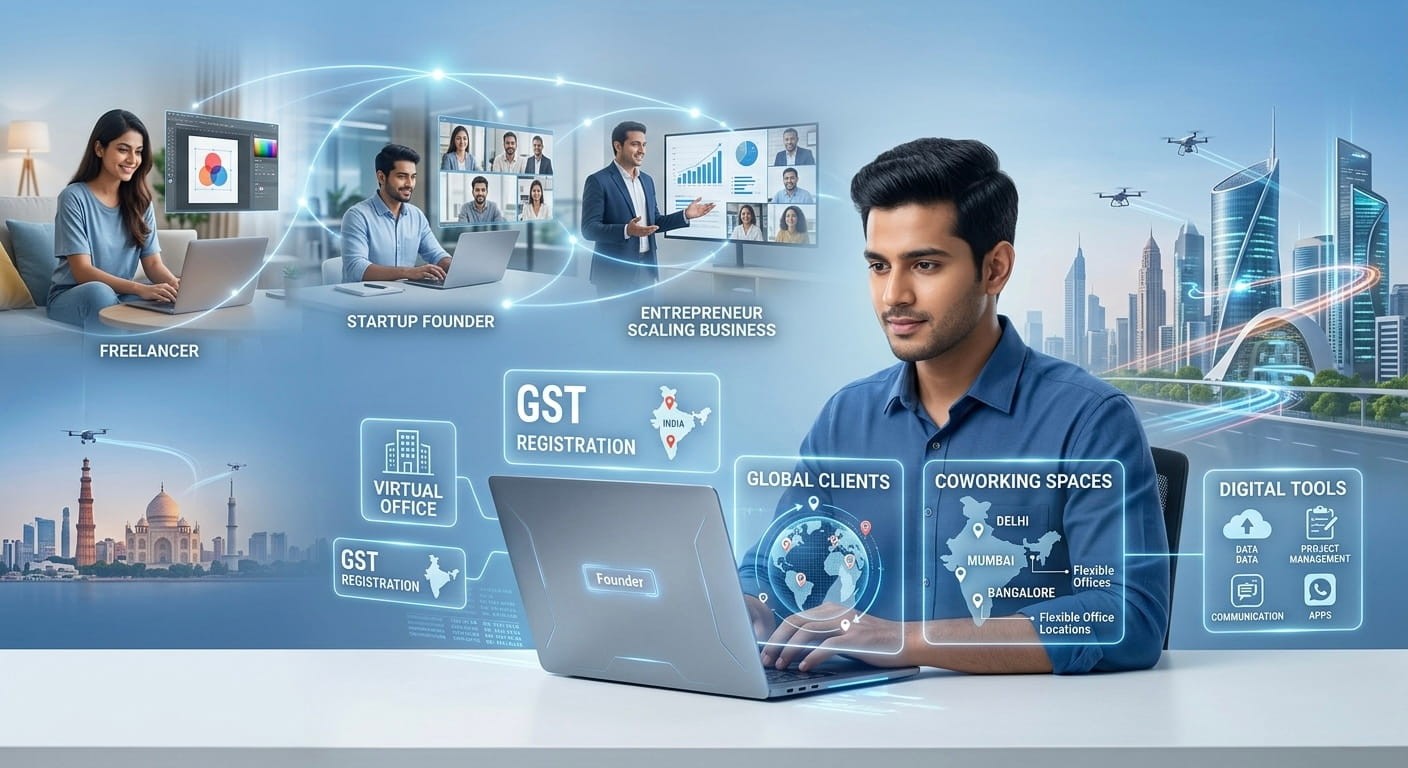
From Freelancers to Founders: Why Everyone Is Choosing Virtual Offices in 2026
The way India works has undergone a dramatic transformation over the past few years. What was once a rigid system of office cubicles, long commutes, and fixed work hours has evolved into a flexible, digital-first ecosystem. At the center of this transformation lies a powerful concept that is redefining how professionals and businesses operate—virtual offices.
In 2026, the rise of the virtual office India 2026 trend is impossible to ignore. From solo freelancers managing global clients to ambitious founders building scalable startups, more professionals are choosing virtual office solutions over traditional office spaces. The reasons go beyond just cost savings—they reflect a deeper shift in mindset, priorities, and the future of work itself.
This blog explores how virtual offices are empowering India’s workforce, why they are gaining massive traction, and how they are shaping the next generation of entrepreneurs.
Rise of Freelancers and Startups in India
India is currently experiencing an entrepreneurial boom unlike anything seen before. With increased internet penetration, digital payment systems, and access to global markets, individuals are no longer dependent on traditional employment structures.
The Freelancer Economy Explosion
Freelancing is no longer a side hustle—it has become a full-time career for millions. Professionals in fields like content writing, digital marketing, graphic design, software development, consulting, and more are working independently and serving clients across the globe.
Several factors are driving this surge:
- Access to global platforms and clients
- Remote work acceptance worldwide
- Low entry barriers to start freelancing
- Desire for work-life balance and independence
However, freelancers face one major challenge: credibility and professional identity. This is where virtual offices come into play, offering a registered business address that enhances trust and legitimacy.
Startup Ecosystem Growth
India’s startup ecosystem is thriving in 2026. From tech startups to D2C brands and service-based companies, founders are launching businesses faster than ever.
But startups often face constraints such as:
- Limited capital in early stages
- High operational costs
- Uncertainty in scaling
Virtual offices provide a perfect solution by eliminating the need for expensive office spaces while still fulfilling legal and professional requirements like GST registration, company incorporation, and business correspondence.
Changing Work Culture in 2026
The workplace is no longer defined by physical presence. Instead, it is driven by productivity, collaboration, and flexibility.
Remote and Hybrid Work Is the Norm
Companies across industries have embraced remote and hybrid work models. Employees and business owners are prioritizing:
- Flexibility in work hours
- Reduced commuting time
- Better work-life balance
- Location independence
This shift has made physical office spaces less essential for many businesses.
Digital Infrastructure Has Improved
With advancements in technology, businesses can now operate seamlessly without a central office. Tools for communication, project management, cloud storage, and virtual collaboration have made remote operations highly efficient.
Focus on Efficiency Over Presence
The traditional belief that productivity requires physical supervision has been replaced by performance-driven metrics. Businesses now care more about results than where the work is being done.
This evolving work culture has paved the way for virtual offices to become a mainstream solution.
Why Virtual Offices Are Gaining Popularity
The rapid adoption of virtual offices in virtual office India 2026 is not accidental. It is driven by a combination of practical advantages that align perfectly with modern business needs.
- Flexibility
One of the biggest advantages of a virtual office is the flexibility it offers.
- Work from anywhere—home, cafes, coworking spaces, or even while traveling
- No long-term lease commitments
- Freedom to choose working hours
This flexibility is especially valuable for freelancers and startups that operate in dynamic environments.
Instead of being tied to a single location, professionals can focus on productivity while maintaining a professional business presence through a virtual office.
- Cost Savings
Traditional office spaces come with significant expenses:
- Monthly rent
- Electricity and maintenance
- Office furniture and setup
- Administrative staff
For small businesses and freelancers, these costs can be overwhelming.
Virtual offices eliminate most of these expenses by offering:
- Affordable business addresses
- Mail handling services
- Meeting room access (on-demand)
This allows businesses to allocate resources toward growth activities like marketing, product development, and hiring.
- Scalability
Scalability is crucial for startups and growing businesses.
Virtual offices provide unmatched scalability by allowing businesses to:
- Expand to multiple cities without physical relocation
- Establish presence in prime locations
- Upgrade services as the business grows
For example, a startup based in a small town can have a virtual address in a metro city, enhancing its brand image and accessibility.
As the business grows, it can seamlessly transition to coworking spaces or physical offices without disrupting operations.
Real-Life Use Cases
Virtual offices are not just a concept—they are actively transforming how businesses operate across industries.
Freelancers Building Personal Brands
A freelance digital marketer or consultant can use a virtual office address to:
- Register for GST
- Create a professional brand identity
- Gain client trust
Instead of using a residential address, a business address in a prime location enhances credibility.
Startups Launching on a Budget
Early-stage startups often operate with limited funding. A virtual office allows them to:
- Complete company registration
- Meet compliance requirements
- Maintain a professional presence
All of this is achieved without the burden of high operational costs.
E-commerce Sellers Expanding Nationwide
Online sellers on platforms like Amazon and Flipkart require GST registration and business addresses in multiple states.
Virtual offices help them:
- Establish a presence in different regions
- Comply with marketplace requirements
- Expand operations without physical offices
Remote Teams and Agencies
Digital agencies with distributed teams can use virtual offices to:
- Centralize business communication
- Conduct occasional client meetings
- Maintain a professional image
This is particularly useful for agencies working with international clients.
Consultants and Service Providers
Professionals such as lawyers, financial advisors, and business consultants can benefit from:
- A credible office address
- Meeting room access when needed
- Reduced operational overhead
Future of Virtual Offices
The future of virtual offices in India looks incredibly promising. As the demand for flexible work solutions continues to rise, virtual offices are expected to evolve further.
Integration with Technology
Virtual offices will increasingly integrate with advanced technologies such as:
- AI-powered communication tools
- Virtual receptionists
- Smart scheduling systems
This will enhance efficiency and provide a seamless experience for businesses.
Growth in Tier 2 and Tier 3 Cities
The adoption of virtual offices is expanding beyond metro cities. Entrepreneurs in smaller cities are leveraging virtual offices to:
- Access larger markets
- Build national and global brands
- Compete with businesses in metro areas
Hybrid Workspace Ecosystems
The future will likely see a blend of:
- Virtual offices
- Coworking spaces
- On-demand meeting rooms
This hybrid model will offer maximum flexibility while maintaining professional infrastructure.
Increased Government Acceptance
Government authorities are becoming more supportive of virtual offices for:
- GST registration
- Company incorporation
- Compliance requirements
This acceptance is further accelerating adoption across industries.
Join the Future of Work with Vospaces
As India moves toward a more flexible and digitally driven economy, virtual offices are becoming an essential tool for success. Whether you are a freelancer looking to build credibility or a startup aiming to scale efficiently, a virtual office offers the perfect balance of professionalism and flexibility.
Vospaces is at the forefront of this transformation, providing modern virtual office solutions tailored for today’s entrepreneurs and businesses.
With Vospaces, you can:
- Get a premium business address in prime locations
- Simplify GST registration and compliance
- Access meeting rooms and coworking spaces when needed
- Build a professional brand without high costs
The shift toward virtual office India 2026 is not just a trend—it is the future of work. Businesses that embrace this model are better positioned to adapt, grow, and succeed in a rapidly changing environment.
Take the Next Step
The question is no longer whether you need a physical office—it’s whether you’re ready to work smarter.
Step into the future with Vospaces and experience a new way of doing business—flexible, scalable, and built for success in 2026 and beyond.